Key Takeaways
- An eye exam uses special equipment to look at the inside and outside structures of your eyes.
- Signs of glaucoma, cataracts, macular degeneration, and diabetic retinopathy can all be detected during an exam.
- Signs associated with diabetes, high blood pressure, high cholesterol, and thyroid conditions can sometimes show up in your eyes.
- Presbyopia and cataracts become more common after 40.
- Many adults are recommended to have an exam every 1 to 2 years, and yearly after 65.
You sit down at St. Marys Optometry, look through a special device, and read a few lines of letters on the other side of the room on the wall. It feels simple, but while you’re answering questions about which lens looks clearer, a lot more is happening behind the scenes.
An eye exam goes beyond just checking your prescription to detect eye diseases like glaucoma, cataracts, macular degeneration, and diabetic retinopathy. Our optometrists can also assess your eye health for signs associated with whole-body conditions such as diabetes, high blood pressure, high cholesterol, and thyroid disease.
An Overview of Eye Exams
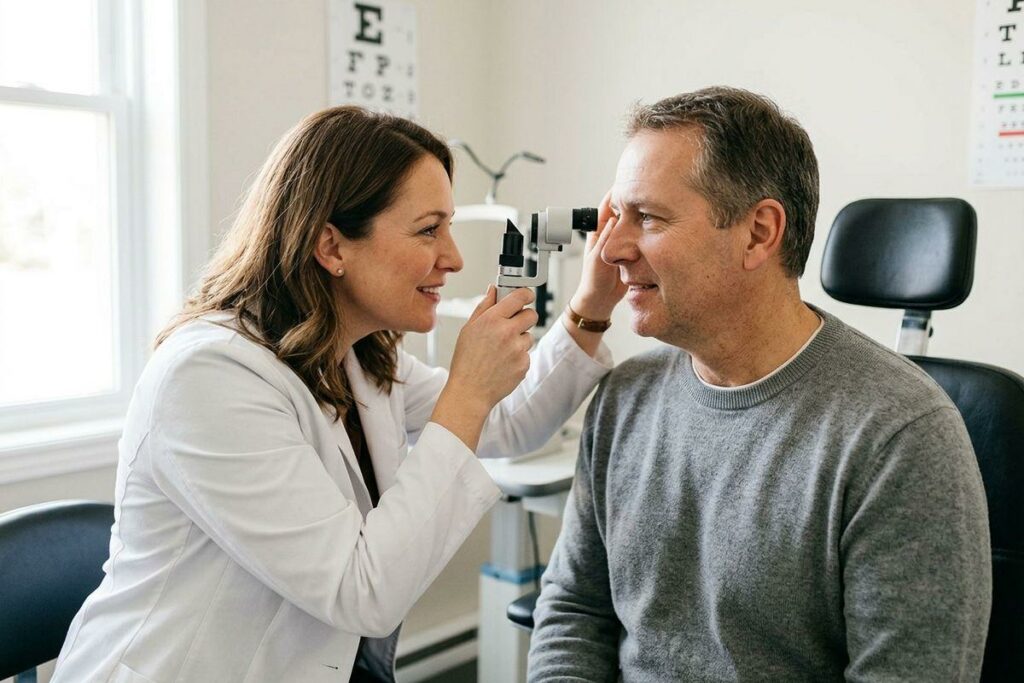
You can think of your eye exam sort of like a physical for your eyes. During the exam, our team uses specialized technology and equipment to assess your vision, check your prescription, and even determine your risk of developing certain eye diseases or conditions throughout your life.
Getting that baseline matters. It gives your optometrist in St. Marys something to compare against at your next visit, so small changes don’t slip by unnoticed.
Eye Diseases That Can Be Detected During an Exam
Glaucoma
Glaucoma is an eye condition that is associated with damage to your optic nerve. This nerve is important because it sends signals to your brain about what you’re seeing, so if it’s damaged, it can cause vision loss.
In its early stages, glaucoma often has no symptoms. That means you could feel completely fine and still have it. That’s why a comprehensive exam includes eye pressure measurements with tools like Goldmann applanation and iCare handheld tonometry, along with a careful assessment of your optic nerve with both lenses and OCT imaging. Catching changes early means your optometrist can prescribe a treatment to help preserve your vision.
Cataracts and Age-Related Macular Degeneration
Both cataracts and age-related macular degeneration (AMD) are linked to aging changes in the eye. Cataracts develop very slowly, so at first, you might not notice anything. As the years go by, you might begin to notice blurry vision or more glare from oncoming headlights at night, as if you’re looking through a dirty window.
AMD impacts the macula, which is the part of the back of your eye that is responsible for clear central vision. That means that as AMD progresses, you may have trouble recognizing faces, or you may notice that words look faded in the middle of a page.
An eye exam can catch these changes early, often before you notice any symptoms yourself. That means we can monitor your condition and refer you for treatment when it’s needed, helping preserve your remaining sight.
Diabetic Retinopathy
People with diabetes are at a higher risk for blood vessel changes at the back of the eye that can cause vision loss. This condition, called diabetic retinopathy, can be detected in a comprehensive eye exam, which is why we recommend an annual eye exam for anyone with diabetes, even if you haven’t noticed any vision changes.
Whole-Body Health Conditions
Diabetes and High Blood Pressure
Your retina (the sensitive tissue at the back of the eye) is the only place in your body where our optometrist can see blood vessels noninvasively. That makes eye exams incredibly valuable in detecting whole-body health conditions, such as diabetes or high blood pressure.
Both of these health conditions are associated with changes to the blood vessels in your retina. Sometimes, these changes can show up in your eyes before you notice other symptoms. If your optometrist notices signs associated with either diabetes or high blood pressure, they can refer you to the appropriate medical professional for further testing, possibly helping you get treatment sooner.

High Cholesterol and Stroke Risk
During an eye exam, our optometrists can look for signs associated with high cholesterol or even stroke risk. This may look like rings around the cornea (the clear outer layer of the eye), small cholesterol deposits, or blockages in the retinal vessels. These are findings you’d never spot by yourself in a mirror, but our eye doctor will be able to notice them and guide you towards next steps.
Thyroid, Autoimmune, and Neurological Conditions
Certain thyroid and autoimmune conditions can affect the tissues around the eyes, the muscles that control eye movement, or the surface of the eye. Neurological conditions can also affect the optic nerve or the way the eyes move and work together.
During an eye exam, your optometrist looks for findings such as bulging or prominent eyes, persistent dry-eye symptoms, inflammation, changes in eye movements, or abnormalities involving the optic nerve. These findings don’t necessarily mean you have an underlying systemic or neurological condition, but they may prompt the optometrist to recommend further evaluation or follow-up with your family doctor or another healthcare provider.
Age-Related Vision Changes to Watch For
Aging is a common factor for many eye problems, such as presbyopia, cataracts, glaucoma, and age-related macular degeneration. These concerns can be detected during an eye exam, and our eye doctors can provide strategies for managing or addressing their development.
Here are some of the most common age-related vision concerns that we keep an eye out for:
- Presbyopia, which is when your near vision shifts after 40, causing nearby objects to appear blurry.
- Cataracts, where the lens inside your eye becomes cloudy.
- Glaucoma, which involves damage to the optic nerve that can lead to vision loss if it isn’t caught early.
- Age-related macular degeneration (AMD), which affects the macula and can impact your central vision over time.
How Often You Should Book an Eye Exam
Kids and Teens
We recommend that children get their first eye exam around 6 months of age, and then again before school to help catch anything that could impact their learning or visual development. We also recommend yearly eye exams throughout the school years to help monitor vision changes, like myopia, which is common during that time of a child’s life.
Adults and Adults 65+
Healthy adults should have an eye exam at least once every 2 years. If you have diabetes, high blood pressure, or a family history of eye disease, we may recommend yearly eye exams to stay on top of any potential changes.
For adults 65 and older, your risk of eye conditions like glaucoma or age-related macular degeneration increases, so yearly exams are recommended. If you’re not sure about timing for yourself or anyone in your family, our eye care team can chat with you about your needs and recommend a personalized schedule.
Schedule Your Eye Exam
Our team at St. Marys Optometry has been getting to know families in St. Marys, ON since 2010, so we can tailor our recommendations to your needs. Whether you’re looking for your kiddo’s first eye exam or need comprehensive testing for a grandparent, we’d love to get to know you better. Book your next eye exam today.