You might schedule dental cleanings twice a year without thinking about it, but when was your last eye exam? Many people put off eye care until they notice problems, yet your eyes change gradually over time in ways you might not immediately recognize. At St. Marys Optometry, our team sees many patients who wish they’d scheduled their comprehensive eye exams sooner.
Most adults need comprehensive eye exams every 2 years, while children and adults over 65 can benefit from annual visits. Your specific schedule depends on your age, health conditions, and whether you wear corrective lenses.
General Eye Exam Guidelines for Different Ages
Your eye care needs change as you age, which means your exam schedule should adapt, too. Young children experience rapid vision development, making early detection of problems important for their learning and development.
Youth under 19 should have annual eye exams to catch issues like lazy eye or focusing problems early. During these formative years, undetected vision problems can affect reading skills and classroom performance. The Canadian Association of Optometrists recommends regular eye exams starting in infancy to support healthy visual development.
Adults between 20 and 64 typically need exams every 2 years, even if they have healthy eyes and no vision concerns. However, adults over 65 face higher risks for age-related conditions like macular degeneration and glaucoma, making annual checkups more beneficial.
Eye Exam Frequency if You Wear Glasses or Contacts
Your prescription doesn’t stay the same forever. Vision changes can happen so gradually that you might adapt to blurrier sight without realizing your prescription needs updating.
Contact lens wearers need annual exams regardless of age because contacts affect the eye’s oxygen supply and tear film. The eye doctor needs to check how well your eyes tolerate the lenses and make sure a proper fit is maintained.
If you notice new symptoms like frequent headaches, eye strain, or difficulty focusing, schedule an exam even if it hasn’t been 2 years yet. These signs often indicate prescription changes or developing eye conditions.
When You Should Schedule Eye Exams More Often
Health Conditions That Affect Your Eyes
Certain health conditions put your vision at higher risk, requiring more frequent monitoring. Diabetes can damage the tiny blood vessels in your retina, leading to diabetic retinopathy that may not show symptoms until significant damage occurs. Diabetic eye exams help catch these changes early, when treatment can preserve your sight. The relationship between diabetes and eye health requires careful monitoring through regular checkups.
High blood pressure affects blood vessels throughout your body, including those in your eyes. Annual exams help detect early signs of hypertensive retinopathy before vision problems develop.
Family history of glaucoma, macular degeneration, or other hereditary eye diseases increases your risk. Regular monitoring helps catch these conditions early when treatment can be most effective.
Vision Changes or Eye Symptoms
Don’t wait for your regular exam if you experience sudden vision changes. Blurriness that develops over days or weeks, especially if it affects one eye more than the other, needs prompt evaluation.
Persistent dry eye, unusual light sensitivity, or eye pain aren’t normal parts of aging. These symptoms can indicate conditions ranging from dry eye syndrome to more serious problems requiring treatment. Dry eye information can help you recognize when professional care is needed.
What Happens During Your Regular Eye Exam
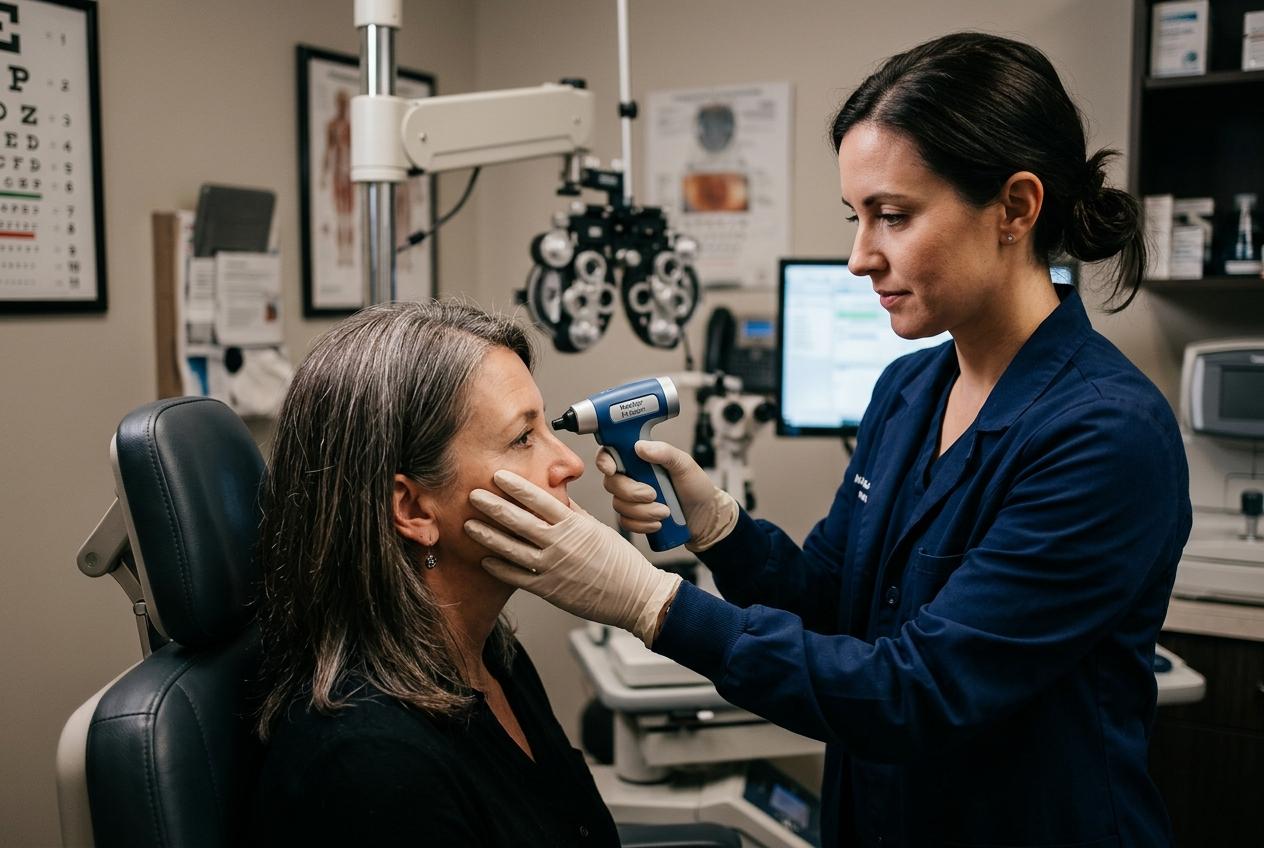
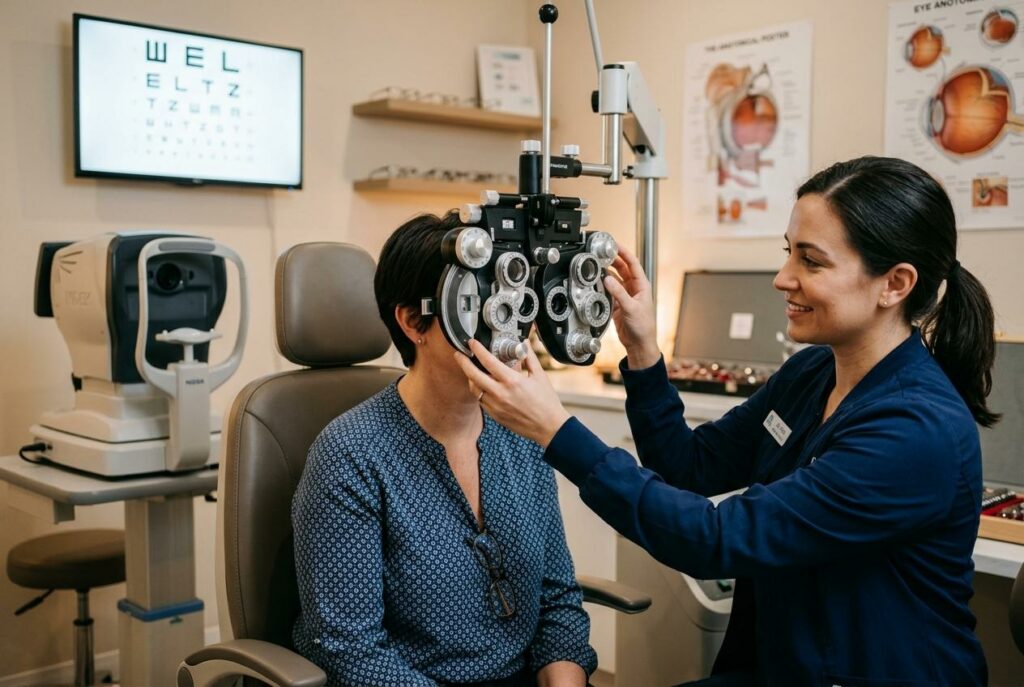
A comprehensive eye exam goes far beyond checking if you can read the eye chart. Your eye doctor tests your distance and near vision, checks how well your eyes work together, and measures your peripheral (side) vision.
Eye pressure measurement screens for glaucoma, a condition that can steal your sight without warning symptoms. The eye doctor also examines your retina and optic nerve using specialized equipment to detect early signs of disease. Comprehensive eye exams differ from simple sight tests by checking your overall eye health, not just your vision.
Modern eye care includes digital retinal photography and other modern tools that can spot problems before you notice any changes in your vision. These detailed images help track any changes over time.
Signs You Need an Eye Exam Sooner
Frequent headaches, especially those that occur after reading or computer work, often signal vision problems or eye strain. Your eyes might be working harder than they should to focus clearly. Digital eye strain symptoms are becoming more common as screen time increases.
If driving at night becomes more challenging or you find yourself holding books farther away to read comfortably, your vision may be changing. These gradual shifts are easy to ignore but indicate it’s time for an updated prescription.
Seasonal eye allergies that interfere with your daily activities deserve attention, too. The right treatment can provide relief and prevent complications from constant rubbing or irritation.
Come See Us
Regular eye exams protect more than just your vision; they safeguard your quality of life. St. Marys Optometry provides comprehensive eye care for every member of your family, from young children to grandparents. Schedule your next eye exam today to keep your vision healthy for years to come.