You might notice your distance vision seems clearer as you get older, even though you’ve worn glasses for nearsightedness since childhood. This change can feel confusing when you’ve spent years relying on corrective lenses to see clearly across the room, and you might wonder whether your eyes are finally healing themselves after all this time.
The short answer is no, myopia typically doesn’t improve with age. Your nearsightedness is likely exactly the same as it was a few years ago. But an interesting natural process starts happening as we get older that plays a clever trick on our eyes.
What Happens to Your Vision as You Get Older
Your eyes go through predictable changes after age 40, just like other parts of your body. The lens inside your eye becomes thicker and less flexible over time, affecting how light focuses on your retina. This is called presbyopia.
Pay close attention to your daily habits. You might find yourself squinting less at road signs or feeling like your distance vision is sharper than it used to be. Some people even think they can see farther without their glasses than they could in their younger years.
How Presbyopia Can Mask Myopia Symptoms
Your eye’s natural lens loses flexibility as you age, making it harder to change shape when you need to focus on close objects. Because your eye struggles to focus up close, your focal point actually pushes further outward.
For someone with perfect vision, this just makes reading more challenging because their lens can’t adjust as easily to focus on nearby text. They might hold books farther away or need brighter light to see clearly. But for someone with myopia, your eyeball is already a bit too long. When presbyopia pushes your focal point outward, it accidentally perfectly aligns with your elongated eyeball.
This creates a temporary balancing effect. Your near vision gets worse, but that exact mechanism compensates for your nearsightedness. It feels completely real, but it’s an optical illusion rather than true healing of your eye.
You might notice a few specific changes to your daily vision:
- Reading a menu becomes frustrating because your lens can’t adjust easily to nearby text.
- You catch yourself holding books farther away or needing brighter light to see clearly.
- Distant objects appear clear because your eyes aren’t working as hard to focus far away.
Near vision problems can also simply overshadow issues with distance, making you less aware of your myopia symptoms. You’re more focused on struggling to read menus or text messages than on distant objects.
Unfortunately, prescription adjustments often become more complex because your optometrist needs to address both conditions simultaneously. Your new glasses might include progressive lenses or bifocals to handle multiple vision needs.
Can Myopia Ever Truly Change Later in Life?
True improvement in myopia is rare and usually involves specific medical circumstances. Certain health conditions can change the shape of your eye or the way your lens focuses light.
Medical conditions like diabetes can lead to temporary vision changes that might make your myopia seem different. These fluctuations occur when blood sugar levels affect the fluid in your eye lens.
Some medications can have side effects that temporarily alter your vision. However, these changes aren’t permanent improvements and often reverse when you stop taking the medication or your condition stabilizes.
What to Expect From Your Vision Over Time
Myopia typically stabilizes in your 20s after progressing through childhood and adolescence. Your prescription changes become less dramatic and more predictable as your eyes finish growing.
Prescription changes in adulthood tend to be smaller and more related to aging than to worsening myopia. You might need minor adjustments every few years instead of significant increases. The focus moves to preventing complications associated with high myopia, such as retinal problems or early cataracts.
Regular monitoring becomes more important than expecting improvement.
Treatment Options for Changing Eyes
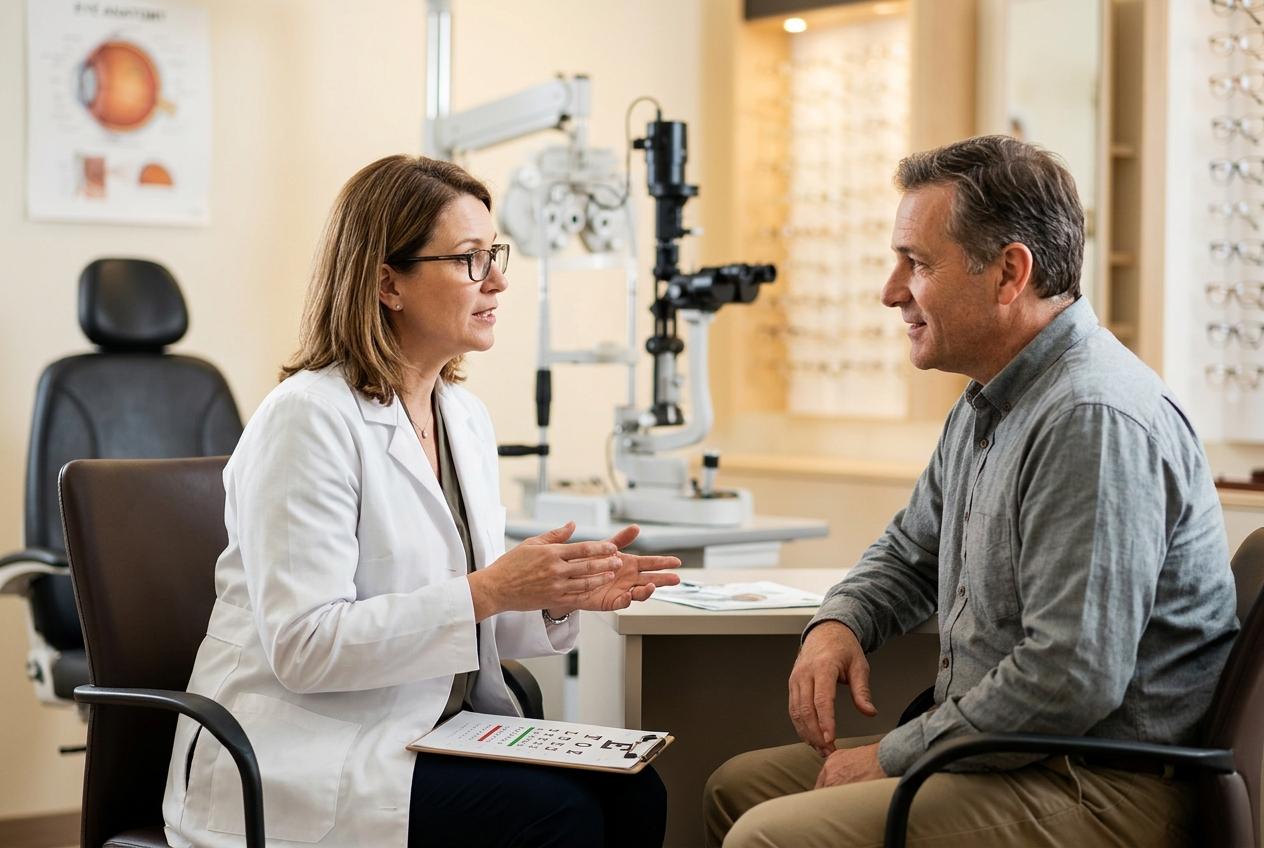
Your optometrist needs to address both distance and near vision conditions simultaneously as you age. Innovative lens designs help manage these evolving needs.
There are a few main ways to manage your combined vision needs:
- Progressive lenses address both your distance prescription and emerging near vision challenges in 1 pair of glasses.
- Multifocal contacts provide clear vision at multiple distances and adapt to your changing visual requirements.
- Surgical options may be appropriate for some people, though age-related lens changes can affect outcomes.
If you’re unsure, talk to your optometrist. We can help you understand which treatments might work for your specific situation.
Taking Care of Your Eyes as You Age
Schedule regular comprehensive eye exams to monitor both your myopia and any age-related changes. These appointments help diagnose problems early and ensure your prescription stays current.
It may be helpful to track any vision changes you notice, including improvements or new difficulties. Keep a simple record of when changes occur and what activities are affected, then discuss your observations with your eye care team during appointments. They can explain what’s normal aging versus what needs attention and help you plan for future vision needs.
Schedule a comprehensive eye exam today and protect your vision. Our experienced team at St. Marys Optometry knows how aging affects your eyes and can guide you through these changes with personalized care.