

You know that scratchy, uncomfortable feeling when your eyes feel dry, but you’re also dealing with seasonal sniffles and scratchy eyes. It’s frustrating when you can’t tell if your discomfort comes from allergies or dry eye — especially when both seem to hit at the same time. St. Marys Optometry sees many patients struggling with this exact combination of symptoms, and understanding the connection can help you find the right relief. Dry eye therapy often addresses both underlying causes together.
Yes, allergies can definitely cause dry eye by disrupting your natural tear production and creating inflammation that affects your tear film quality. The good news is that once you understand the connection, you can find relief that addresses both issues.
How Allergies Lead to Dry Eye
When allergens reach your eyes, your body triggers a protective response that can make your eyes drier. The tissues around your eyes become inflamed as they try to fight off what they see as invaders.
Inflammation disrupts the delicate balance of your tear film. Your tears have three layers—oil, water, and mucus—and when inflammation interferes with any of these layers, your tears evaporate too quickly or don’t spread evenly across your eye surface. Meibomian glands in your eyelids produce the oil layer, and allergic inflammation can block them.
Antihistamines you take for allergy relief can also reduce your natural tear production. While these medications help with sneezing and a runny nose, they can leave your eyes feeling even drier than before.
Tell the Difference Between Allergies & Dry Eye
Allergy Eye Symptoms
Allergy symptoms often present with telltale signs that help you identify the root cause. You’ll notice these symptoms often appear alongside other symptoms such as sneezing or congestion.
- Intense itching with a runny nose
- Puffy, swollen eyelids
- Seasonal timing patterns
Dry Eye Symptoms
Dry eye symptoms can feel different and typically persist regardless of the season. You might notice these feelings get worse in air conditioning, windy weather, or after long periods of screen time. Understanding dry eye symptoms helps you recognize when you need professional care.
- Scratchy, burning sensations year-round
- Feeling like sand in the eyes
- Stringy mucus discharge
Common Allergens That Affect Your Eyes
Different allergens can trigger your eye symptoms depending on where you spend time and the season. Some people react to outdoor allergens while others struggle more with indoor triggers.
- Seasonal pollen from trees & grasses
- Indoor dust mites & pet dander
- Smoke, perfumes & cleaning products
You might notice your symptoms change throughout the year as different allergens peak. Spring brings tree pollen, summer means grass pollen, and fall introduces ragweed—while indoor allergens can bother you any time. UV protection becomes even more important when your eyes are already irritated by allergens.
Relief Options for Allergy-Related Dry Eye
At-Home Care Steps
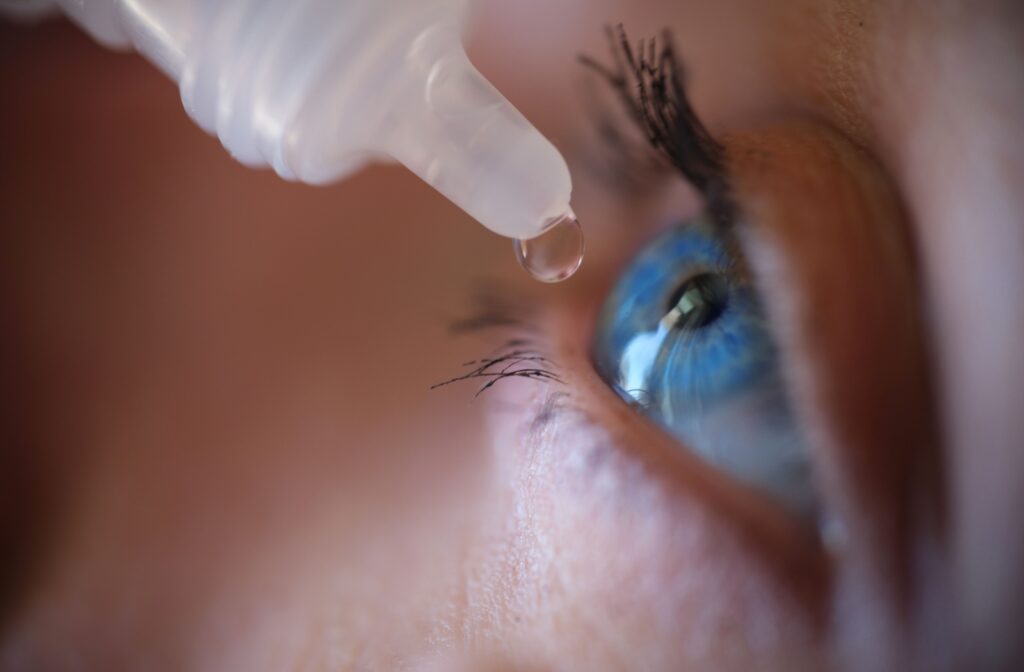
Simple daily habits can make a big difference in how your eyes feel. These gentle approaches help flush out allergens while replenishing moisture in your eyes.
- Preservative-free artificial tears daily
- Cool compresses for puffy eyes
- Sunglasses outdoors during high pollen
Professional Treatment Approaches
When home remedies aren’t enough, your eye doctor can provide targeted treatments that address both the allergic response and dry eye symptoms. These treatments work together to give you longer-lasting relief. Warm compresses can help unclog oil glands affected by allergic inflammation.
- Prescription antihistamine eye drops
- Punctal plugs for tear retention
- Treatment plans targeting root issues
When to Visit Your Eye Doctor
Sometimes your symptoms need professional attention, especially when they start affecting your daily activities or vision. Don’t wait if you notice changes beyond the typical scratchy, watery eyes.
- Symptoms persist despite home remedies
- Vision changes or light sensitivity
- Contact lens discomfort increases
The team at St. Marys Optometry understands how frustrating it can be when your eyes don’t feel comfortable. The doctors take time to determine whether allergies, dry eye, or both contribute to your symptoms, then create a treatment plan tailored to your specific needs. Schedule an appointment to get the relief you deserve and keep your eyes feeling their finest.